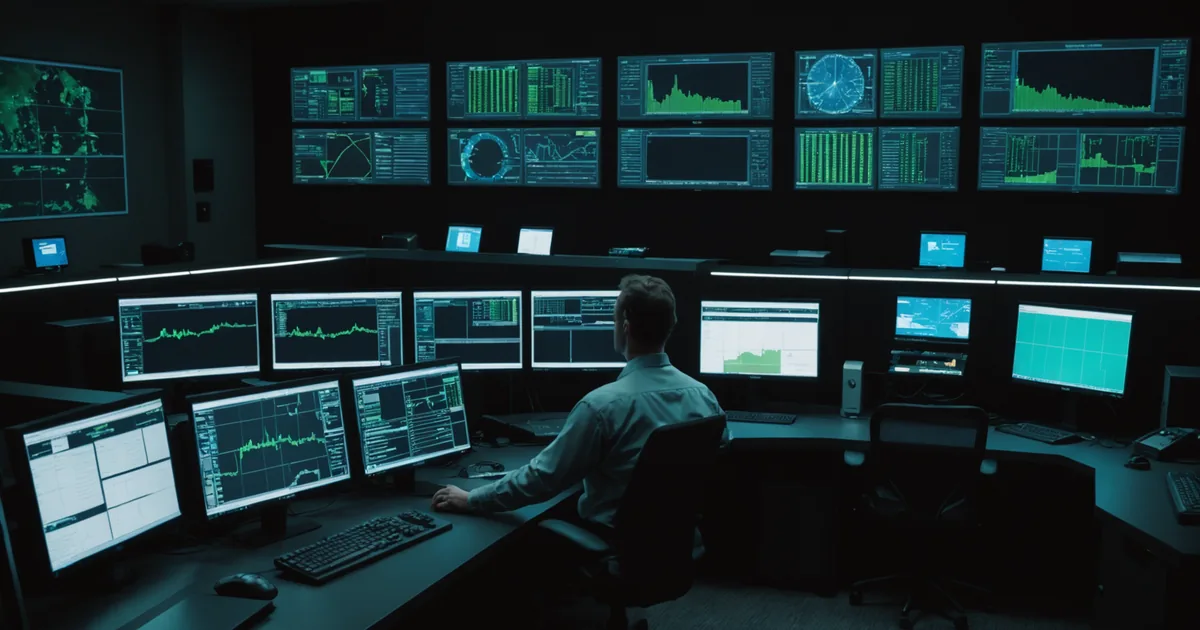


There is a version of the "AI adoption" problem that is framed as a technology gap: grid operators do not have the tools, or the training, or the budget to use what is available. That version is mostly wrong, at least for BESS dispatch automation in Japan's market. The actual barrier is epistemological. Operators are willing to use automated systems they can reason about. They are not willing to hand over control to ones they cannot.
This is a rational position. A grid operator is personally and organizationally accountable for dispatch decisions. If an automated system makes a dispatch error that results in an imbalance penalty, a curtailment miss, or a frequency regulation shortfall, the operator bears the consequence. Trusting an opaque algorithm means accepting accountability for decisions you cannot audit. That is a reasonable thing to refuse.
The Explainability Gap in Practice
Most BESS dispatch optimization systems produce a schedule: charge at this hour, discharge at that hour, hold at these SOC bounds. What they do not typically produce is the reasoning behind the schedule. An operator looking at a charge instruction for 09:00 to 11:00 wants to know: is this charging in anticipation of a curtailment event? Is it charging to build SOC for a JEPX midday discharge? What forecast drove the decision? What happens if the forecast is wrong?
When operators cannot answer these questions from the system's output, they do two things. First, they add manual checkpoints: they read the day-ahead schedule and make their own judgment call before releasing it, which adds latency and partially defeats the purpose of optimization. Second, they reduce their reliance on the automated system during high-stakes periods, overriding it precisely when its value is highest (during price spikes, during curtailment events, during rapidly changing conditions).
The result is a system that gets used in calm, predictable conditions and bypassed during the conditions it was designed to help with. That is a common and underappreciated failure mode of dispatch automation.
What Explainability Actually Requires
Explainability for dispatch optimization is not the same as model interpretability in the academic machine learning sense. Operators do not need to understand how a gradient boosting model generates its internal feature weights. They need to understand, in power-systems terms, why the schedule looks the way it does.
A useful dispatch explanation includes:
- The key forecast inputs for today (irradiance forecast, expected generation volume by hour, JEPX price forecast for key intervals)
- The dominant objective being optimized (curtailment avoidance vs. JEPX arbitrage vs. frequency regulation positioning)
- The binding constraints (SOC floor for regulation reserve, interconnection capacity, any contracted capacity obligations)
- The sensitivity of the plan to forecast error (if solar generation comes in 20% below forecast, what changes)
This level of explanation is achievable with current optimization methods. Linear programming and mixed-integer linear programming models have explicit dual variables that can be translated into constraint sensitivity reports. When the optimizer says "charge at 09:00," the constraint that made that decision optimal is recoverable from the solution. The work is presenting it in terms an operator finds immediately readable.
Building Trust Through Incremental Authority
We have found that the most effective adoption path for dispatch automation is not "here is a fully autonomous system, trust it." It is a staged transfer of authority that tracks the operator's accumulating evidence base.
Stage one is forecast transparency: the system shows its solar generation and JEPX price forecasts alongside actual outcomes every day, with no automation at all. Operators observe forecast quality directly. Over weeks of this, they develop a calibrated view of when the forecast is reliable and when it is not. That evidence base is what enables the next stage.
Stage two is assisted decision-making: the system shows its recommended dispatch schedule with explanations, the operator reviews and approves or modifies before release, and outcomes are tracked. The operator's manual modifications teach both the operator and the system something: the operator learns where the optimizer's recommendations are systematically good or bad, and the system can be evaluated against the operator's modifications to identify areas of genuine disagreement.
Stage three is conditional automation: the operator defines the conditions under which automated dispatch requires no human review (routine days, low forecast uncertainty, no active curtailment risk) and retains manual review for conditions they have identified as higher-risk. Authority is transferred gradually, backed by evidence rather than assertions.
This path is slower than full automation from day one. It is also more likely to produce a system that is actually used, and used correctly, over a multi-year operating period.
The Override Interface Matters More Than the Algorithm
One underappreciated aspect of automation trust: the quality of the override interface is often more important for adoption than the underlying optimization quality. An operator who can see the full dispatch plan, understand the reasoning, make a targeted modification to a specific hour's instruction, and immediately see how that modification propagates through the day's SOC trajectory will engage with the system as a tool. An operator who can only accept or reject the full plan, or whose overrides produce non-obvious downstream effects, will stop engaging.
We are not saying the optimization algorithm is unimportant. A poor algorithm produces bad schedules and operators quickly learn to distrust it regardless of how good the interface is. But given competent optimization, the interface design determines whether operators use the system as intended during the high-value edge cases that matter most.
Accountability Structures Do Not Disappear with Automation
There is a persistent assumption in some conversations about dispatch automation that fully autonomous operation is the goal and that human involvement in the loop is a transitional phase to be eliminated. In Japan's regulatory context, this framing is premature. The area TSO holds the connected party accountable for imbalance and regulation shortfalls. The regulatory framework does not currently provide a path for distributing that accountability to a software vendor.
That means grid operators will remain in the accountability chain regardless of how automated the dispatch system becomes. The question is not whether humans are accountable, but whether the automation is designed to make their accountability manageable. A system that is transparent, auditable, and designed to keep the operator informed rather than to replace them will earn adoption. A system that treats operators as obstacles to efficiency will face sustained resistance.